
UNMASKING SAMHAIN: CHAPTER ELEVEN – THE DEAD, THE OTHERWORLD & FAMILIAR SPIRITS
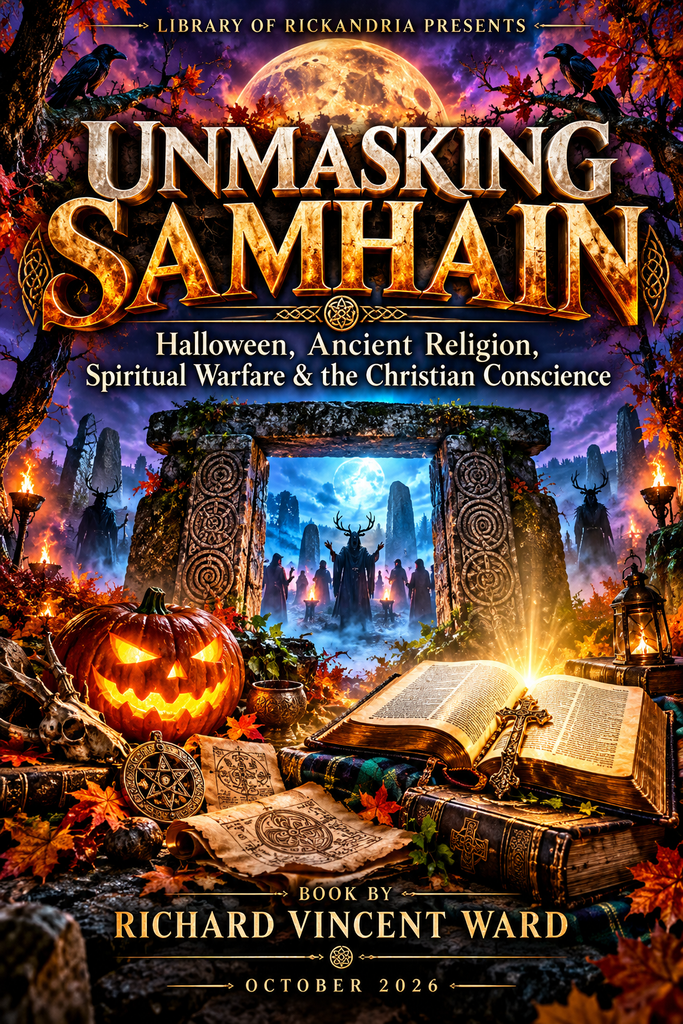
UPDATED BY VCG ON 10/23/2026 @ 15:15 EST
CHAPTER 11
THE DEAD, THE OTHERWORLD & FAMILIAR SPIRITS
Medieval Irish Supernatural Traditions, Biblical Necromancy, the Woman of Endor, Demonic Impersonation & the Difference Between Representation and Invocation
“And when they shall say unto you, Seek unto them that have familiar spirits, and unto wizards that peep, and that mutter:
should not a people seek unto their God? for the living to the dead?”— Isaiah 8:19, King James Bible
1. A Voice from Beyond the Door
There are few experiences more unsettling than hearing a voice where no living speaker should be.
A sound in an empty room.
A familiar name spoken in a dream.
A figure glimpsed in the darkness.
A story told beside a fire about someone who returned after death.
Such experiences and narratives have occupied an important place in human history.
They appear in ancient religious writings, medieval legends, accounts of bereavement, modern entertainment, and contemporary claims of paranormal activity.
Some people interpret them through religion.
Others understand them through memory, perception, grief, suggestion, or the conditions under which the experience occurred.
Still others remain uncertain.
The investigator must distinguish the experience from the explanation assigned to it.
A frightened person may sincerely believe that a deceased relative has appeared.
A storyteller may describe an encounter with a supernatural figure.
A medium may claim to communicate with the dead.
A filmmaker may portray a ghost.
These situations are not identical.
They differ in intention, conduct, evidence, and meaning.
Yet popular religious discussions frequently place them within one category.
The ghost in a medieval story becomes a familiar spirit.
The familiar spirit becomes a demon.
The demon becomes the power supposedly operating behind every ghost costume.
The costume becomes a form of necromancy.
And the ordinary participant is said to enter a spiritual relationship without intending to do so.
This is essentially the progression found in the original 2025 edition of Unmasking Samhain.
Chapter 2, Necromancy & Familiar Spirits, presented Halloween as a continuing form of communion with the dead.
It described familiar spirits as demonic beings impersonating deceased humans.
It then extended this interpretation to haunted houses, ghost stories, costumes, and other cultural activities.
Some of the biblical passages cited were directly relevant to necromancy.
But the argument did not adequately distinguish intentional spirit consultation from fictional representation.
Nor did it recognize that Christian interpreters have historically disagreed about the identity of the figure appearing in one of the Bible’s most important necromancy narratives.
That passage is 1 Samuel 28.
The distinction is consequential.
Scripture may plainly prohibit seeking supernatural guidance through forbidden means while leaving other questions about the nature of spirits and the events described in particular narratives open to interpretation.
The present chapter will examine those questions.
We shall begin in medieval Ireland, where the Otherworld appears in stories associated with Samhain.
We shall then consider the Hebrew terminology translated in the King James Bible as familiar spirits.
We shall examine Saul’s consultation of the woman at Endor.
We shall compare relevant biblical passages concerning the dead.
And we shall determine whether the evidence supports treating modern Halloween entertainment as literal necromancy.
The guiding principle is simple.
Before condemning an act as necromancy, we must identify what necromancy is and determine whether the act in question actually constitutes it.
2. The Irish Otherworld Is Not Simply a Land of Human Ghosts
The medieval Irish literary record contains a richly developed supernatural world.
Heroes encounter extraordinary women.
People disappear into mysterious realms.
Mounds conceal supernatural inhabitants.
Time may pass differently beyond ordinary human experience.
Otherworldly figures offer promises, warnings, gifts, or threats.
Some stories are associated with Samhain.
Others are not.
These traditions are important historical evidence.
But their supernatural beings should not automatically be described as deceased human ancestors.
The Meaning of the Síd
The Irish term síd, appearing in different historical and grammatical forms, is associated with supernatural places and beings.
Its inhabitants are commonly called áes síde, the people or folk of the síd.
In later folklore, these beings became associated with the fairy world.
But the English term fairy does not capture every feature of the earlier Irish material.
The beings could possess great power, beauty, wealth, danger, or unusual abilities.
They were not necessarily small creatures with wings.
Nor were they necessarily the spirits of ordinary deceased humans.
Historian Lisa M. Bitel investigates these traditions in Otherworld: Nine Tales of Wonder and Romance from Medieval Ireland, published by Oxford University Press in 2024.
Her work examines medieval Irish stories involving human encounters with the áes síde, including narratives of love, supernatural power, otherworldly journeys, and extraordinary relationships.
See Lisa M. Bitel, Otherworld (Oxford University Press).
This literature demonstrates that Irish supernatural traditions cannot responsibly be reduced to one universal category of dead human spirits.
A Modern Scholarly Label
Even the word Otherworld requires care.
It is a convenient English scholarly term.
But medieval Irish and British writers did not necessarily classify every extraordinary realm under one term equivalent to the modern concept.
Aisling Byrne, in Otherworlds: Fantasy and History in Medieval Literature, cautions that the modern category can obscure the varied functions of supernatural realms in medieval writing.
Her analysis emphasizes their literary character and the importance of examining the particular narratives rather than treating every imagined realm as a passive survival of prehistoric Celtic belief.
See Aisling Byrne, Otherworlds (Oxford University Press, 2016).
The distinction matters.
A supernatural realm in a heroic narrative may serve a different literary function from the biblical realm of the dead, a Christian vision of purgatory, or a nineteenth-century séance.
The similarities may justify comparison.
They do not establish identity.
3. The Tuatha Dé Danann, the Síd and Later Religious Interpretation
Medieval Irish literature contains traditions concerning the Tuatha Dé Danann, extraordinary figures associated with the legendary history of Ireland.
In some accounts, they withdraw from ordinary human rule and become associated with the síd.
These narratives contributed to later understandings of the supernatural inhabitants of Irish landscapes.
But they survive within manuscripts shaped by medieval literary and Christian intellectual cultures.
The stories therefore require historical and textual interpretation.
Pre-Christian Inheritance and Christian Composition
Some figures and motifs probably preserve elements of older Irish religious tradition.
But the surviving texts were transmitted and often composed within Christian Ireland.
Their authors could adapt native narrative material while drawing upon biblical, classical, and wider European literary sources.
Brigid Ehrmantraut’s University of Cambridge doctoral research, Interpretatio Hiberniana: Classical Influences in Medieval Irish Depictions of Otherworldly Characters, investigates precisely such interactions.
Her work demonstrates that medieval descriptions of extraordinary Irish beings could be shaped by classical mythology as well as indigenous narrative traditions.
This complicates the assumption that every medieval Otherworld story preserves an unchanged prehistoric doctrine.
Were the Síd the Dead?
Some later traditions associate particular supernatural figures or locations with deceased humans.
Other narratives describe beings who appear to possess identities and histories independent of ordinary human death.
Consequently, a categorical assertion that all inhabitants of the síd were ancestral ghosts is too broad.
Equally, it would be too broad to insist that no Irish supernatural tradition ever associated them with death or deceased persons.
The correct interpretation depends upon the particular source.
This point directly affects the historical argument concerning Samhain.
A tale describing an encounter with a supernatural woman does not automatically document a ceremony for summoning dead ancestors.
A story involving a supernatural mound does not automatically describe necromancy.
And a festival associated with such stories is not thereby established as a universal annual rite of communication with the human dead.
Otherworldly beings, ancestral spirits, human ghosts, and demons are categories that must be distinguished before they are compared.
4. Samhain and the Crossing of Boundaries
The association between Samhain and supernatural encounters is genuine.
University College Cork’s Department of Early and Medieval Irish discusses this evidence in Secrets at Samhain.
The article identifies Samhain as a recurring setting in stories involving extraordinary encounters and attempts to gain supernatural knowledge.
Among the examples are Fíngen’s Night-Watch and an annalistic account concerning Newgrange.
These sources do not simply disappear because modern popular books have exaggerated their significance.
They belong to the actual record.
Fíngen’s Night-Watch
The tale describes Fíngen receiving information from a woman associated with the síd.
Their encounters occur at Samhain.
The woman conveys news concerning events elsewhere in Ireland.
Within the narrative, Samhain is therefore connected with supernatural knowledge.
This is relevant to the history of divination and otherworldly communication.
But the passage does not establish that the woman is a deceased human ancestor.
Nor does it prove that every Irish household performed the same practice.
Its evidentiary value lies in demonstrating the tradition preserved by the text.
The Annals of Tigernach
A passage associated with AD 1084 concerns Gilla Lugán, who was said to visit the mound at Newgrange during Samhain in order to learn the future from Óengus Óc.
This is a particularly important example because it describes an intentional effort to obtain extraordinary knowledge.
The recorded action bears a closer functional resemblance to divination than an ordinary ghost story does.
Nevertheless, the annalistic account remains a medieval textual witness.
It does not establish the objective existence of the supernatural figure.
Nor does it demonstrate a universal prehistoric practice.
The Adventure of Nera
Echtra Nerai, or The Adventure of Nera, portrays Samhain as a setting for unsettling supernatural events.
The narrative involves a hanged man, extraordinary encounters, and the world associated with the síd.
The story should be recognized as genuine medieval Irish literature with striking supernatural content.
But the events of the tale should not automatically be transformed into a yearly ritual performed by historical Druids.
A narrative can preserve religious ideas without constituting a liturgical instruction manual.
The Historical Finding
Samhain possessed strong supernatural associations in parts of medieval Irish literature.
Some accounts describe the pursuit of hidden knowledge.
Others portray extraordinary beings and dangerous encounters.
But those sources do not establish that a literal supernatural boundary opens annually.
Nor do they justify identifying every supernatural figure as a demonic impersonation of a deceased human.
The surviving texts support a history of beliefs and stories.
Further theological conclusions require separate argument.
5. What Is Necromancy?
The English word necromancy is commonly used to describe attempts to communicate with the dead, especially for the purpose of obtaining knowledge.
Its history is connected with Greek terminology involving the dead and divination.
The essential feature is intentional consultation.
Necromancy is not simply the presence of death-related imagery.
A grave marker is not necromancy.
A funeral is not necromancy.
Remembering a deceased relative is not necromancy.
A historical account of someone who died is not necromancy.
A fictional ghost appearing in a story is not, merely by appearing in the story, an act of necromancy by the audience.
The relevant question concerns what a participant is attempting to do.
An Important Distinction
A person attending a séance to request information from a deceased relative is engaged in an activity presented as spirit consultation.
A person watching a film in which an actor portrays a séance is watching a representation of such an activity.
These are not the same action.
A Christian may have further moral objections to the fictional portrayal.
Such objections can be examined through biblical principles concerning entertainment, conscience, and moral imagination.
But the objection must be stated accurately.
A representation of a forbidden act is not necessarily the commission of that act.
This distinction exists elsewhere in ordinary moral reasoning.
A fictional story depicting theft is not itself a theft.
A courtroom drama depicting murder does not make the audience murderers.
A historical book describing idolatry does not make the reader an idol worshipper.
The moral effects of representations remain legitimate subjects for discussion.
But those effects require their own arguments.
Necromancy and Divination
Necromancy is more specific than the general desire to understand death.
It involves a claimed means of obtaining communication or information from the deceased.
Within the biblical texts, necromancy appears among practices condemned because they seek spiritual knowledge through forbidden means.
That is the conduct to which our scriptural investigation must first attend.
6. The Hebrew Problem: What Is a “Familiar Spirit”?
The phrase familiar spirit appears repeatedly in the King James Bible.
It is especially important in Leviticus, Deuteronomy, 1 Samuel, Isaiah, and the historical books.
But the English expression can be misleading when interpreted through modern ideas concerning demons, haunted houses, or a spirit that regularly accompanies a witch.
The underlying Hebrew terminology requires examination.
The Word ‘Ôb
The Hebrew word commonly transliterated ‘ôb appears in passages concerning mediums, spirits, and consultation of the dead.
Its precise historical development and range of meanings are debated.
Janusz Lemański examines the problem in Pit, Spirit, Necromancer or Instrument Used in Necromancy? The Problem of Finding the Correct Meaning of the Hebrew Word ‘ôb, published in The Biblical Annals in 2024.
The article considers several proposed meanings, including a pit, a spirit of the dead, an object or instrument associated with necromancy, and a practitioner who consults such spirits.
It also considers how the usage may have developed across different biblical writings.
This is a significant warning against overly narrow definitions.
The same Hebrew term may be used in expressions concerning the practitioner, the spirit allegedly consulted, or the associated practice.
The interpreter must attend to the passage.
The Word Yidde’oni
A related Hebrew term, commonly transliterated yidde’oni, also appears in biblical prohibitions.
It is frequently associated with a diviner, medium, or one who possesses claimed supernatural knowledge.
The King James Bible sometimes renders such terminology through the older English word wizard.
But the contemporary English word wizard also describes a fictional magician.
These meanings should not be treated as automatically identical.
The biblical text concerns ancient religious practices involving forbidden claims to supernatural knowledge.
A fictional wizard in a children’s story belongs to a different literary and social setting.
Whether the story is morally appropriate must be evaluated through a separate argument.
Why the Language Matters
The original 2025 manuscript treated familiar spirits as one clearly defined category of demons that impersonate deceased humans.
That may reflect an interpretation found within some Christian theological traditions.
But it does not exhaust the linguistic possibilities of ‘ôb.
Nor does it establish the identity of every supernatural being described in ancient Irish literature.
A lexical question cannot be settled simply by adopting the later English connotations of familiar spirit.
The Hebrew terminology is directly relevant to forbidden spirit consultation; its meaning must not be expanded into an undocumented universal theory of demonic impersonation.
7. Leviticus 19:31 — A Clear Prohibition
The supplied Pure Cambridge KJV reads:
“Regard not them that have familiar spirits, neither seek after wizards, to be defiled by them: I am the LORD your God.”— Leviticus 19:31
The command appears within the Holiness Code of Leviticus.
The surrounding chapter addresses worship, justice, moral conduct, relationships within the community, and fidelity to the LORD.
Verse 31 prohibits turning toward particular practitioners associated with forbidden spiritual consultation.
The action is identifiable.
Israel is not to seek such guidance.
What the Verse Directly Establishes
The verse forbids the conduct described within Israel’s covenantal religious setting.
It treats seeking mediums or comparable practitioners as spiritually defiling.
A Christian theological argument against intentional necromancy can reasonably begin here, while explaining the relationship between Old Testament law and Christian ethics.
What the Verse Does Not Establish
It does not name Halloween.
It does not describe Irish Samhain.
It does not say that every picture of a ghost is a familiar spirit.
It does not establish that a child wearing a skeleton costume is seeking a medium.
Nor does it describe a universal mechanism by which decorations admit demons into homes.
Those propositions would require additional argument.
The command is serious without such additions.
8. Leviticus 20:6 — Seeking Spiritual Counsel Elsewhere
Leviticus 20:6 is equally important.
The KJV reads:
“And the soul that turneth after such as have familiar spirits, and after wizards, to go a whoring after them, I will even set my face against that soul, and will cut him off from among his people.”
The passage addresses intentional religious infidelity.
The language of going after forbidden practitioners emphasizes a deliberate turning toward them.
It is not merely a statement about the accidental presence of an image.
The Covenant Context
Leviticus belongs to the religious instruction of ancient Israel.
The sanctions described in the surrounding chapter belong to that legal and covenantal setting.
Christian communities differ in how they understand the continuing application of Mosaic legal provisions.
But nothing in the passage authorizes private violence, persecution, or harassment against contemporary religious minorities.
The text should be used for theological interpretation, not as justification for mistreatment.
The Original Manuscript’s Application
The earlier edition used the verse to support the claim that Halloween activities constitute contact with familiar spirits.
But the verse does not establish that modern recreational practices necessarily involve such contact.
It condemns the act of turning toward forbidden practitioners.
Whether a particular modern activity constitutes that act must be shown.
The difference is not a weakening of the command.
It is a faithful identification of its object.
9. Deuteronomy 18:9–14 — The Central Biblical Passage
Deuteronomy 18 contains an extensive list of forbidden practices.
Its language is among the most direct biblical evidence concerning divination and necromancy.
Verses 10–11 include those who practice divination, enchantment, witchcraft, and consultation with familiar spirits or the dead.
The immediate context concerns Israel’s entry into the land and the practices of surrounding nations.
A distinction is made between forbidden religious methods and the guidance to be received through the LORD’s appointed means.
The Important Contrast
The prohibition should be considered alongside the passage’s subsequent discussion of prophetic instruction.
The issue is not merely whether a practitioner employs unusual imagery.
It is where the community seeks religious and spiritual knowledge.
The text contrasts prohibited means of divination with faithful dependence upon the LORD.
This framework is important for Christian interpretation.
The Direct Application
A person intentionally attempting to consult the dead for hidden knowledge engages in conduct closely corresponding to the prohibited category.
A séance undertaken for that purpose therefore raises an obvious scriptural issue.
Similarly, a deliberate invocation performed to obtain supernatural guidance can be evaluated through the passage.
The Indirect Application
A ghost-themed costume, fictional story, or theatrical attraction does not automatically possess the same purpose.
An author may argue that some representations encourage unhealthy curiosity or trivialize forbidden practices.
That is a further ethical argument.
It is not the direct meaning of Deuteronomy 18.
The distinction between command and application must remain visible.
10. Isaiah 8:19–20 — The Living and the Dead
Isaiah 8:19 presents an especially powerful question.
The prophet contrasts seeking counsel from those claiming access to spirits with seeking guidance from God.
The verse asks why the living should turn to the dead.
Verse 20 continues:
“To the law and to the testimony:
if they speak not according to this word, it is because there is no light in them.”
The passage belongs to Isaiah’s prophetic ministry amid political danger, religious instability, and the question of whom Judah should trust.
The contrast concerns spiritual authority.
The Real Concern
The text criticizes the pursuit of guidance through forbidden means.
It directs attention toward divine instruction.
This is directly relevant to necromancy.
The Interpretive Error
The original manuscript used Isaiah 8:20 as a general proof that Halloween is a supernatural gateway.
But the passage does not identify Halloween.
It does not describe October 31.
It does not assert that a fictional story about the dead constitutes an attempt to seek counsel from them.
The biblical command should be applied according to the action it addresses.
Isaiah warns against seeking guidance from the dead; it does not establish that every cultural representation of death is communication with the dead.
11. Saul and the Woman at Endor: The Case That Cannot Be Ignored
We now arrive at the most important narrative in the chapter.
First Samuel 28 describes King Saul during a period of profound crisis.
The prophet Samuel has died.
The Philistines are preparing for battle.
Saul is afraid.
The narrative states that he attempts to obtain guidance from the LORD but receives no answer through the means available to him.
He then seeks a woman associated with a familiar spirit.
Although Saul had previously removed mediums and similar practitioners from the land, he now secretly seeks the very practice he had prohibited.
He disguises himself and travels by night.
The woman initially fears that the request is a trap.
Saul reassures her.
He asks her to bring up Samuel.
The result becomes one of the most debated supernatural episodes in the Bible.
The Narrative’s Exact Wording
First Samuel 28:12 states:
“And when the woman saw Samuel, she cried with a loud voice:
and the woman spake to Saul, saying, Why hast thou deceived me? for thou art Saul.”
The woman reports seeing a figure.
Saul asks for a description.
She describes an old man covered with a mantle.
Saul identifies the figure as Samuel.
Verse 15 then begins:
“And Samuel said to Saul, Why hast thou disquieted me, to bring me up?”
The narrative proceeds to report a message concerning Saul’s disobedience and impending defeat.
It concludes with Saul overwhelmed by fear and the woman providing him with food.
These details must be read carefully.
The biblical narrator repeatedly uses the name Samuel.
That fact creates a serious problem for an interpretation claiming that Scripture never portrays the dead as speaking or interacting.
The narrative plainly depicts such an encounter.
The identity and mechanism of the encounter remain disputed.
But the text cannot simply be ignored.
12. Was It Really Samuel?
Christian interpreters have historically offered several explanations of the Endor episode.
The disagreements extend into the early centuries of Christianity.
They were not invented by modern skeptics.
Oliver James examined these traditions in his Oxford doctoral thesis, Death, Demons, and the Medium of the Message: Exploring the Exegesis of 1 Samuel 28:3–25 in the Early Church, completed in 2021.
His research documents substantial disagreements among early Christian commentators.
Interpretation One: The Figure Was Samuel
Some early Christian writers read the narrative according to its apparent wording.
The narrator calls the figure Samuel.
The figure delivers a message consistent with Samuel’s earlier prophetic warnings.
The events predicted are connected with Saul’s death and military defeat.
Under this interpretation, the passage depicts an exceptional appearance of the deceased prophet.
Advocates of this view may argue that the event occurred by divine permission rather than through any legitimate power possessed by the medium.
The consultation remains forbidden.
The appearance, if genuine, does not authorize imitation of Saul’s conduct.
This interpretation is associated in early Christian reception with figures including Origen and others whose positions differed in detail.
Interpretation Two: The Figure Was a Demon Impersonating Samuel
Other early Christian interpreters rejected the idea that a medium could truly summon God’s prophet.
They argued that the appearance was demonic deception.
Under this interpretation, Saul encountered an evil spirit masquerading as Samuel.
The narrative’s identification of the figure is understood through the participants’ perception or the conventional manner of reporting what seemed to occur.
This interpretation appears within early Christian writings associated with figures including Gregory of Nyssa and Eustathius of Antioch.
Its defenders may appeal to the biblical condemnation of spirit consultation and the capacity of evil powers to deceive.
Interpretation Three: A Literary or Narrative Presentation
Other interpreters emphasize the literary form of the account.
They examine how the narrator presents Saul’s fear, abandonment, disobedience, and approaching destruction.
Some interpret the passage as a carefully constructed story with theological and polemical purposes.
This does not necessarily require denying every supernatural element.
It concerns what the narrative is doing and how its language should be understood.
Micha Roi’s article Samuel as Jack-in-the-Box: The Woman of Endor as a Hidden Polemical Story, published in 2024, offers one such literary interpretation.
What All Three Interpretations Have in Common
They recognize that Saul sought forbidden spiritual consultation.
They acknowledge that the narrative is intended to communicate serious theological consequences.
They disagree concerning the ontological identity of the appearing figure and the mechanism involved.
That disagreement must not be concealed.
13. The Original Book’s Most Important Exegetical Overstatement
The 2025 edition declared:
“Scripture never portrays the dead as interactive.”
It also claimed that the appearance of departed humans must be demonic impersonation.
These are categorical statements.
They do not accurately reflect the interpretive complexity of 1 Samuel 28.
The biblical narrator explicitly calls the figure Samuel.
Some Christian traditions interpret the appearance as genuine.
Others interpret it as deceptive.
Therefore, the original assertion cannot be presented as the uncontested teaching of Scripture.
Does This Mean Necromancy Is Permitted?
No.
The prohibition against seeking a medium is not eliminated by uncertainty over the identity of the figure.
In fact, 1 Chronicles 10:13–14 explicitly presents Saul’s consultation as part of his unfaithfulness.
The KJV states in verse 13:
“So Saul died for his transgression which he committed against the LORD, even against the word of the LORD, which he kept not, and also for asking counsel of one that had a familiar spirit, to enquire of it;”
The condemnation concerns Saul’s disobedience and his act of seeking forbidden counsel.
It does not require every reader to adopt one identical explanation of the apparition.
The distinction is crucial.
Scripture can condemn Saul’s conduct without requiring us to claim certainty about the supernatural mechanism beyond what the text establishes.
The Corrected Conclusion
A responsible Christian interpretation should affirm that Saul’s consultation of a medium is portrayed negatively.
It should also acknowledge that the figure’s identity has generated substantial theological disagreement.
The original manuscript’s universal claim of demonic impersonation must therefore be presented as an interpretive position rather than direct, undisputed biblical revelation.
14. Other Biblical Passages Concerning the Dead
The original edition employed Psalm 115:17 to support the claim that the departed are never portrayed as active.
The verse reads:
“The dead praise not the LORD, neither any that go down into silence.”
The psalm contrasts the worship of the living with the condition of those who have gone down into death.
But its poetic language must be examined within the broader biblical canon.
The Psalms and the Realm of Death
The Old Testament frequently uses imagery involving the grave, silence, and the inability of the dead to participate in ordinary earthly worship.
These passages belong to ancient Israelite poetry and its theological language.
Their meaning must not be extended automatically into the claim that no biblical narrative ever depicts a deceased person speaking.
First Samuel 28 itself creates a serious interpretive problem for such an extension.
Matthew 17:1–8 — The Transfiguration
The Gospel account of the Transfiguration portrays Moses and Elijah appearing with Jesus.
Moses had died according to Deuteronomy 34.
Elijah’s departure is described differently in 2 Kings 2.
The event is exceptional and occurs within the ministry of Jesus.
It is not a séance.
The disciples do not summon Moses.
The appearance is presented within a revelatory event centered upon Christ.
Nevertheless, the account complicates any simplistic claim that Scripture never depicts departed biblical figures appearing.
Luke 16:19–31 — The Rich Man and Lazarus
Jesus tells a story involving a rich man, Lazarus, and Abraham after death.
The narrative includes dialogue.
Christian interpreters disagree about the genre and the extent to which the imagery should be treated as a literal description of the intermediate state.
Some read the passage primarily as a parable.
Others regard it as providing more direct information about the afterlife.
But it cannot responsibly be omitted from a discussion claiming that Scripture contains no representations of postmortem communication.
The passage does not authorize the living to seek counsel from the dead.
Its function within Jesus’ teaching is different.
Revelation 6:9–11
The book of Revelation depicts souls associated with martyrdom crying out for divine judgment.
The scene belongs to apocalyptic literature.
It should not be treated as an ordinary report of earthly communication with the deceased.
Nevertheless, it supplies another example of biblical representation that exceeds the simplistic assertion that the dead are uniformly depicted as inactive and silent.
The Necessary Distinction
These passages do not establish that mediums can reliably communicate with the departed.
They do not justify necromancy.
Nor do they settle every doctrinal question concerning the intermediate state.
They demonstrate that biblical teaching concerning death is more complex than the original manuscript acknowledged.
A theological position must account for the full set of relevant texts.
It must not rely on one verse while ignoring others that complicate its formulation.
15. First John 4:1 — What Does It Mean to Try the Spirits?
The 2025 manuscript quoted 1 John 4:1:
“Beloved, believe not every spirit, but try the spirits whether they are of God:
because many false prophets are gone out into the world.”
The verse is relevant to spiritual discernment.
But the final clause identifies a central concern: false prophets.
The following verses distinguish teachings according to their confession concerning Jesus Christ.
The immediate passage therefore addresses the testing of religious claims and prophetic instruction.
The Interpretive Problem
The original manuscript used the verse as support for identifying Halloween’s supernatural figures as deceptive familiar spirits.
But the passage does not discuss Halloween.
Nor does it present a general catalogue identifying every claimed ghost, otherworldly figure, or religious symbol as a demon.
Its direct concern is the discernment of competing teachings and claims to spiritual authority.
The broader principle of discernment is relevant.
The specific application requires additional reasoning.
Discernment Is Not Automatic Suspicion
Testing claims involves more than assuming the most alarming explanation.
A person may falsely claim spiritual authority.
A person may misinterpret an ordinary experience.
A person may sincerely report something difficult to explain.
A fictional portrayal may have no claim to supernatural authority at all.
These situations should be distinguished.
A command to test spiritual claims does not mean that every cultural image is itself a spiritual claim.
The responsible application begins by identifying what is being asserted.
16. Are All Apparitions Demonic Impersonations?
This question must be separated into historical, biblical, psychological, and metaphysical components.
The Historical Question
Different religious cultures have described apparitions in different ways.
Some traditions interpret them as ancestors.
Others describe gods, spirits, or supernatural messengers.
Later Christian writers have sometimes interpreted such reports as demonic deception.
The historical record can document these interpretations.
It cannot automatically establish that one interpretation explains every event.
The Biblical Question
Scripture contains teachings concerning evil spiritual beings and deception.
Second Corinthians 11:14 speaks of Satan appearing as an angel of light within Paul’s argument against deceptive religious teachers.
This passage provides a biblical basis for concern about deception.
But it does not establish that every reported apparition of a deceased human is necessarily demonic.
First Samuel 28 demonstrates that Christian interpreters have disagreed on precisely that question.
The Psychological Question
People can experience unusual perceptions, dreams, feelings of presence, and other phenomena.
Some occur during grief.
Others may arise in connection with sleep, stress, expectation, or medical circumstances.
A psychological explanation may be appropriate in particular cases.
But no one should be told that every unusual experience proves demonic activity.
Nor should it be assumed that every experience has the same psychological cause.
The Metaphysical Question
Whether spiritual beings objectively exist cannot be settled merely by collecting reports of unusual experiences.
Theological traditions differ concerning the nature of such beings.
Empirical research can examine experiences, reports, behavior, and some proposed physical mechanisms.
But it does not independently establish every supernatural explanation.
The responsible investigator must avoid both automatic supernatural attribution and unjustified universal dismissal.
17. Grief, Memory and Experiences of the Departed
This question is especially important when discussing bereavement.
A grieving person may dream vividly of someone who has died.
Someone may briefly hear a familiar voice.
Another may experience a strong feeling that the departed person is present.
Such experiences are reported in psychological research.
They should not automatically be characterized as demonic contact.
The Research Record
Karina Stengaard Kamp and colleagues published an interdisciplinary review in Schizophrenia Bulletin in 2020:
The review examined reported sensory experiences of deceased persons, their relationship to grief, and the social and psychological contexts in which they occur.
The authors concluded that the great majority of such experiences described in the research were benign.
They emphasized that interpretation should consider the person’s relationship to the deceased and the relevant cultural circumstances.
What This Does Not Mean
The research does not establish that every reported experience possesses a particular natural cause.
It does not prove or disprove theological claims concerning the afterlife.
It also does not mean that every distressing perception should be ignored.
Persistent or frightening experiences that interfere with daily life may deserve medical or mental-health evaluation.
Why This Matters for Christian Pastoral Care
The original 2025 manuscript’s language concerning demonic impersonation could cause unnecessary fear if applied indiscriminately to ordinary bereavement experiences.
A grieving person should not automatically be told that remembering a loved one’s voice or experiencing a vivid dream means a demon has entered the household.
That claim is not established by the psychological research.
Nor is it directly established by the biblical passages cited.
A responsible Christian response can maintain theological convictions concerning forbidden spirit consultation while treating grieving people with kindness, accuracy, and appropriate care.
The biblical prohibition concerns seeking forbidden counsel.
An involuntary dream is not the same action.
This distinction is morally significant.
18. Modern Spiritualism: A Nineteenth-Century Religious Movement
Another historical distinction is necessary.
The modern Spiritualist movement developed prominently during the nineteenth century.
Its practitioners claimed that communication between living people and departed spirits was possible.
Séances, table-turning, trance mediumship, and spirit writing became associated with the movement.
The movement attracted supporters and critics from a wide range of religious and intellectual backgrounds.
The Historical Evidence
The Oxford University Museum of Natural History’s Victorian Spiritualism documents the movement’s popularity and controversy.
It notes that scientists, writers, and other public figures participated in debates concerning the alleged phenomena.
Some believers regarded spiritual communication as religiously meaningful.
Some investigators attempted to study the claims scientifically.
Others identified deception, suggestion, or natural explanations.
This is a documented modern historical movement.
Its religious practices should be distinguished from ancient Celtic religion.
Spiritualism and Samhain
Modern Spiritualism cannot simply be described as the unchanged survival of Druidic Samhain.
Its institutional development belongs to the nineteenth century.
Its religious vocabulary, methods, and cultural setting differed from those of medieval Irish narrative.
Some modern practitioners may connect spirit communication with Halloween or Samhain.
But that connection does not establish identical origins.
Historical evidence requires chronology.
The presence of a similar goal—communicating with spirits—does not prove an uninterrupted ritual lineage.
Biblical Evaluation
A Christian interpreting Leviticus 19, Deuteronomy 18, and Isaiah 8 may identify deliberate attempts to communicate with the dead as religiously prohibited.
That argument concerns the actual intention and activity.
It does not require falsely presenting nineteenth-century Spiritualism as an ancient Druidic institution.
A clear biblical evaluation is stronger when the history is accurately described.
19. The Ouija Board: An Object with a Documented Modern History
The Ouija board often appears in discussions of spirit communication.
Its history provides a revealing example of how an object may acquire different social meanings.
The modern commercial talking board emerged from the nineteenth-century Spiritualist environment.
Talking-board practices were reported in the United States during the 1880s.
The Kennard Novelty Company began producing and marketing a board under the name Ouija around 1890.
A patent was granted in 1891.
These developments are documented in the Smithsonian’s history of the Ouija board.
The board subsequently passed through different phases of commercialization and entertainment.
Intention and Context
A participant may use a talking board with the explicit intention of communicating with the deceased.
That purpose creates a direct theological question concerning spirit consultation.
Another person may treat the board as a novelty or game.
A historian may examine it as an artifact of nineteenth-century popular culture.
These activities are not identical.
The Ideomotor Effect
Psychologists have identified the ideomotor effect as an important explanation for apparently autonomous movement in talking-board sessions.
Small movements may be produced without the participant’s conscious awareness of initiating them.
This provides a natural mechanism capable of explaining some reported experiences.
But explaining movement does not independently settle every religious or metaphysical belief held by participants.
Nor does it determine the moral status of intentional attempts at necromancy within a particular theological framework.
The Correct Biblical Distinction
The relevant question is not whether the object possesses one unchanging supernatural essence.
It is whether the person is engaging in a practice that seeks forbidden spiritual counsel.
The same distinction must be applied to other objects and activities.
A book describing a séance is not the same as participating in one.
An actor pretending to use a talking board is not necessarily attempting spirit communication.
A person deliberately invoking the dead is engaged in a different activity.
The conduct must be identified before the biblical judgment is applied.
20. Ghost Hunting, Paranormal Investigation and Haunted Attractions
The original manuscript treated ghost hunting and haunted houses as forms of necromancy.
But the terms describe activities that can differ considerably.
Deliberate Spirit Invocation
A group may intentionally attempt to summon the dead and request messages.
Within Christian interpretations of the biblical prohibitions, this raises a direct concern.
Investigation of an Unusual Report
A person may investigate a reported sound, image, or disturbance to determine whether an ordinary explanation exists.
Such an investigation does not necessarily involve attempting to communicate with the dead.
It might involve environmental factors, building conditions, perception, or other ordinary questions.
The mere act of investigating a claim is not inherently necromancy.
Entertainment
A commercial haunted attraction may employ actors, lighting, sound effects, scenery, and theatrical storytelling.
Its purpose may be to frighten or entertain.
Some Christians may object to the content.
Parents may judge it inappropriate for children.
But a staged encounter is not necessarily an actual invocation of spirits.
Fictional Ghost Stories
A ghost story may explore grief, memory, guilt, fear, suspense, or the unknown.
It may contain theological ideas the reader rejects.
But reading a story is not automatically equivalent to performing the actions represented within it.
The evaluation of fiction should consider content and effect.
It should not begin by falsely identifying the activity.
Intentional necromancy, paranormal investigation, and fictional entertainment must not be treated as one undifferentiated practice.
21. The Nephilim and the Origin of Demons
The original Chapter 2 connected familiar spirits with the Nephilim and asserted that disembodied giant spirits seek renewed influence through rituals and fear.
This is a distinct theological theory.
It should not be confused with the explicit teaching of Leviticus 19 or Deuteronomy 18.
Genesis 6:1–4
Genesis 6 describes the sons of God, daughters of men, and the Nephilim.
The passage has generated extensive interpretive debate.
Some traditions understand the sons of God as heavenly beings.
Others identify them with human lineages or rulers.
The interpretation of the Nephilim likewise remains disputed.
First Enoch and Later Traditions
A more developed explanation of evil spirits as connected with the deceased offspring of heavenly beings appears in portions of 1 Enoch, especially the Book of the Watchers.
This literature is important for studying Second Temple Jewish beliefs.
But its canonical status differs among Christian traditions.
Most Protestant biblical canons do not include 1 Enoch.
The Ethiopian Orthodox Tewahedo Church includes it within its broader canon.
The relationship between Enochic traditions and later Christian demonology is historically significant.
But those traditions must be identified as such.
The Original Manuscript’s Theological Leap
The original book moved from the Nephilim to the claim that familiar spirits impersonate the deceased and that Halloween rituals provide those spirits with access to modern households.
The complete chain of reasoning is not explicitly stated in Genesis 6.
It is not established by the biblical prohibition against mediums.
And it is not demonstrated by medieval Irish Otherworld narratives.
A theological author may argue for this interpretation.
But the argument requires examination of multiple texts, assumptions, and extra-biblical traditions.
It cannot be presented as though one biblical verse directly establishes the entire system.
The subject will receive fuller treatment in Chapter 27.
For the present chapter, the necessary conclusion is that the Nephilim explanation is a disputed theological construction, not an established historical explanation of Halloween ghosts.
22. Remembering the Dead Is Not Necessarily Consulting Them
One of the most important moral distinctions in this chapter concerns remembrance.
Human societies remember their dead.
Families preserve photographs.
Graves are maintained.
Biographies are written.
Anniversaries are observed.
Funerals provide occasions for mourning.
Religious communities commemorate martyrs or other significant figures.
Such activities may possess theological meanings that differ among traditions.
But they are not automatically acts of necromancy.
Remembrance and Invocation
A person may remember a deceased parent without attempting to receive a message from that parent.
A historian may write about someone who died centuries ago without believing the person is spiritually present.
A Christian congregation may read Hebrews 11 and reflect upon examples of faith without attempting to summon the individuals described.
These activities must be distinguished from an intentional ritual to obtain supernatural counsel.
Christian Disagreement
Christians disagree about prayers for the dead, the invocation of saints, and postmortem intercession.
Catholic and Orthodox traditions interpret certain practices differently from many Protestant traditions.
The biblical and theological arguments deserve examination.
But accurate disagreement requires identifying what each tradition teaches.
It is not sufficient to label every religious remembrance of the departed as a séance.
Nor is it sufficient to assume that every practice involving the departed is permissible simply because it is called remembrance.
The exact act and theological reasoning must be examined.
The Historical Parallel
This distinction also applies to Samhain.
Some later Halloween traditions concern the remembrance of deceased humans.
Others concern fairies or otherworldly figures.
Some involve attempts to obtain knowledge.
Others involve entertainment.
The historical evidence does not support assigning one identical meaning to all of them.
23. Children, Ghost Imagery and Moral Formation
The original manuscript argued that children dressing as ghosts, skeletons, or vampires were unknowingly imitating spiritual defilement.
That argument combines several separate questions.
First, what does the costume represent?
Second, what does the child understand?
Third, what emotional effect might the imagery produce?
Fourth, does the activity involve intentional religious participation?
Fifth, what moral principles should guide the family?
These questions are related.
They are not identical.
Representation
A skeleton may symbolize death, anatomy, mortality, danger, humor, or fictional horror.
Its meaning depends upon context.
A school science lesson involving a skeleton is not necromancy.
A theatrical portrayal of a skeleton is not automatically spirit invocation.
The same object can function differently in different settings.
Developmental Appropriateness
Children differ in maturity and sensitivity.
Some may enjoy fictional supernatural stories.
Others may find them distressing.
Parents should consider the individual child, the content of the activity, and the family’s convictions.
It is reasonable to avoid experiences that create unnecessary distress.
But claims concerning automatic spiritual damage require evidence beyond the mere presence of frightening imagery.
Moral Content
An activity may celebrate cruelty, humiliation, or destructive behavior.
If so, parents may have legitimate ethical concerns.
But those concerns should be described according to the actual content.
A concern about violence is not automatically a concern about necromancy.
A concern about fear is not proof of demonic possession.
And a concern about conscience is not proof that every family must reach the same decision.
Pastoral Responsibility
Children should not be taught unsupported spiritual mechanisms as settled fact.
A warning that every ghost decoration grants demons access to a house may create anxiety without establishing the alleged danger.
Christian instruction should seek truthful understanding.
It should identify genuine moral questions without manufacturing certainty.
24. Direct Rebuttal of the 2025 Edition
We can now examine the original Chapter 2 claim by claim.
Claim 11.1 — Scripture Prohibits Seeking Counsel Through Necromancy
Finding: Supported.
Leviticus 19, Deuteronomy 18, Isaiah 8, and the narrative of Saul establish a clear biblical concern with forbidden spirit consultation.
This element of the original book should be retained.
Claim 11.2 — Samhain Possessed Supernatural Associations
Finding: Verified within medieval Irish tradition.
Relevant narratives describe encounters with the síd and the pursuit of extraordinary knowledge.
The evidence does not establish every proposed prehistoric ritual.
Claim 11.3 — Every Otherworldly Being in Irish Tradition Was a Deceased Human Ghost
Finding: Unsupported.
Medieval Irish sources contain varied supernatural categories, including inhabitants of the síd whose identities cannot be reduced to deceased humans.
Claim 11.4 — Samhain Was Fundamentally and Universally a Festival for Consulting the Human Dead
Finding: Not established.
The festival possessed seasonal, social, political, and supernatural literary associations.
The proposed universal function exceeds the evidence.
Claim 11.5 — All Familiar Spirits Are Demons That Impersonate the Deceased
Finding: A contested theological interpretation, not an established lexical or universally agreed exegetical conclusion.
The biblical vocabulary is more complex, and the identity of Samuel’s apparition has been historically disputed.
Claim 11.6 — Scripture Never Depicts the Dead as Interactive
Finding: Contradicted as an unqualified statement about biblical narrative.
First Samuel 28 repeatedly identifies the appearing figure as Samuel, though interpreters disagree about its ontological identity.
Other biblical passages also contain postmortem appearances or dialogue in distinct literary and theological settings.
Claim 11.7 — The Appearance in 1 Samuel 28 Must Be a Demon
Finding: Disputed.
Ancient and modern Christian interpreters have defended several explanations.
The biblical condemnation of Saul’s consultation does not require one uncontested theory of the apparition’s identity.
Claim 11.8 — Séances Intended to Consult the Dead Raise Direct Biblical Concerns
Finding: Supported as a Christian theological application.
The deliberate purpose corresponds closely to the practices prohibited in the relevant biblical passages.
Claim 11.9 — Every Ghost Story Is a Necromantic Ritual
Finding: Unsupported.
The representation of a fictional event is not necessarily the performance of that event.
Further moral concerns must be argued separately.
Claim 11.10 — Every Haunted Attraction Is Actual Spirit Consultation
Finding: Unsupported.
The activities vary.
Some are theatrical entertainment; others may involve deliberate religious practices.
The distinction is essential.
Claim 11.11 — Every Person Reporting a Bereavement Experience Has Encountered a Demon
Finding: Unsupported.
Psychological research documents many benign bereavement experiences.
No universal supernatural explanation follows from the reports.
Claim 11.12 — Ouija Boards Developed Directly from Prehistoric Samhain Rituals
Finding: Unsupported.
The commercial talking board has a documented nineteenth-century history associated with Spiritualism and novelty manufacture.
Claim 11.13 — The Nephilim Explain All Modern Ghosts and Halloween Spirits
Finding: Unestablished theological construction.
The proposed doctrine depends upon disputed interpretations and additional traditions beyond the explicit wording of Genesis 6.
Claim 11.14 — Ordinary Halloween Decorations Automatically Open Spiritual Gateways
Finding: Unestablished.
Neither the historical evidence nor the cited biblical passages directly establish the proposed mechanism.
Claim 11.15 — Christians May Conscientiously Refuse Activities They Regard as Spiritually Compromising
Finding: Supported as a matter for theological and ethical reflection.
Such decisions should be grounded in accurate information and should not require asserting unsupported universal consequences.
25. Corrected Replacement Passage for the 2026 Edition
The Dead, the Otherworld and Forbidden Spiritual Consultation
Medieval Irish literature contains extensive traditions concerning supernatural beings and extraordinary realms.
Some of these narratives are associated with Samhain, the seasonal occasion marking the opening of winter in early Irish tradition.
Stories such as The Adventure of Nera and Fíngen’s Night-Watch depict encounters involving the síd and the acquisition of extraordinary knowledge.
These traditions are historically genuine as surviving literary evidence.
They do not, however, establish that every supernatural figure was a deceased human ancestor or that all Samhain observances involved necromancy.
The Irish síd and its inhabitants belong to a complex narrative tradition shaped by indigenous material, medieval Christian learning, and other literary influences.
Their identities and functions vary.
A supernatural tale must therefore be interpreted as a particular literary source rather than automatically converted into a universal prehistoric ritual.
The Christian Scriptures contain clear prohibitions against seeking forbidden guidance through mediums, necromancers, and related practitioners.
Leviticus 19:31, Deuteronomy 18:9–14, and Isaiah 8:19–20 are central texts.
First Samuel 28 presents Saul deliberately consulting a woman associated with a familiar spirit.
First Chronicles 10:13–14 explicitly treats his conduct as unfaithfulness.
These passages provide a substantial biblical basis for rejecting intentional necromancy within Christian theology.
But the identity of the figure appearing in 1 Samuel 28 has been disputed for centuries.
Some Christian interpreters understand the narrative as describing an exceptional appearance of Samuel.
Others regard the figure as a demon impersonating him.
Still others emphasize the passage’s literary and theological presentation.
The biblical prohibition against seeking a medium does not require concealing these interpretive disagreements.
Likewise, the Hebrew terminology translated in the KJV as familiar spirits possesses a debated linguistic history.
The relevant words may refer, according to context, to spirits, practitioners, or the means associated with attempted communication.
They should not be used without explanation as though they necessarily identify one fully defined category of demons impersonating every deceased human.
Modern Spiritualism, séances, and talking boards have their own historical developments.
A deliberate attempt to obtain messages from the dead may raise a direct biblical concern.
But a fictional ghost story, theatrical haunted attraction, historical account of a deceased person, or ordinary bereavement experience is not automatically the same activity.
The moral evaluation must identify the conduct actually taking place.
Christians may disagree concerning the appropriateness of frightening entertainment or supernatural fiction.
Parents may reasonably restrict activities that conflict with family convictions or cause distress.
Such decisions deserve respect.
But the historical and biblical evidence does not establish that every Halloween ghost costume constitutes necromancy or that every depiction of death creates a demonic covenant.
The original 2025 manuscript overstated those conclusions.
The revised edition therefore maintains Scripture’s prohibitions against intentional forbidden spirit consultation while rejecting unsupported assertions concerning universal demonic impersonation and automatic spiritual access.
The goal is not to eliminate biblical warning.
It is to apply biblical warning faithfully.
The distinction between historical tradition, intentional religious practice, fictional representation, psychological experience, and theological inference must remain clear.
Only through those distinctions can the subject be investigated with both seriousness and integrity.
26. Conclusion — The Question Behind the Apparition
We began with a voice from beyond the door.
By the end of this chapter, the question had become more complicated.
We encountered medieval Irish beings associated with the síd.
We examined supernatural Samhain narratives.
We distinguished the Otherworld from a simple realm of human ghosts.
We investigated the Hebrew terminology translated as familiar spirits.
We examined the biblical prohibition against seeking mediums.
We followed Saul into the night at Endor.
And we encountered a scriptural narrative whose interpretation has divided Christian commentators for centuries.
The central biblical teaching remains serious.
Saul deliberately sought forbidden spiritual counsel.
His conduct is presented negatively.
First Chronicles explicitly connects his consultation with unfaithfulness.
The law of Israel prohibits necromancy and related practices.
These conclusions do not require historical exaggeration.
They do not require inventing a Druidic ritual.
And they do not require asserting that every ghost costume opens a supernatural gateway.
They stand upon the relevant biblical texts.
At the same time, the original manuscript’s claim that Scripture never depicts the dead as interactive cannot be retained without substantial qualification.
First Samuel 28 must be examined.
Matthew 17 must be considered.
Luke 16 and Revelation 6 must be interpreted according to their literary contexts.
The biblical evidence is more complex than the earlier account allowed.
The same complexity appears in history.
The Irish Otherworld contains beings who are not always identifiable as departed humans.
Medieval Samhain stories contain supernatural encounters that cannot automatically be treated as eyewitness documentation of historical rites.
Modern Spiritualism arose through nineteenth-century religious developments.
Talking boards acquired commercial forms during the same broad period.
Contemporary ghost-themed entertainment possesses varied purposes.
And bereavement experiences should not be assigned one frightening supernatural explanation without evidence.
The moral question therefore cannot be settled by the appearance of a symbol alone.
It must be settled through careful identification of the practice and faithful interpretation of the relevant biblical teaching.
This is especially important for Christian parents and teachers.
A child should be taught the difference between fiction and religious participation.
A believer should be able to reject intentional necromancy without claiming that every story about a ghost is a séance.
A family should be able to make conscientious decisions without being compelled by unsupported assertions concerning invisible contracts.
And those who report unusual or distressing experiences should be treated with compassion rather than automatic accusation.
The revised investigation therefore reaches an important conclusion.
Scripture prohibits seeking forbidden counsel from the dead.
Medieval Irish tradition genuinely associates Samhain with supernatural encounters.
Those two facts do not establish that every supernatural story or Halloween custom constitutes necromancy.
The connection must be demonstrated.
The same is true of claims concerning demons, familiar spirits, and the Nephilim.
Theological interpretations may be considered.
But they must not be presented as explicit biblical revelation when the text does not establish them.
The purpose of discernment is not to transform every unfamiliar image into proof of invisible evil.
It is to recognize the difference between what is forbidden, what is represented, what is reported, what is believed, and what can responsibly be known.
The words of Isaiah return us to the central concern:
“Should not a people seek unto their God? for the living to the dead?”— Isaiah 8:19, KJV
The prophet’s question concerns the proper source of spiritual counsel.
It is a serious question.
But its seriousness is not increased by assigning necromancy to activities that have not been shown to involve it.
Our task is therefore to preserve the biblical command without expanding it through unsupported historical or supernatural claims.
The next chapter will investigate witchcraft and the changing meanings of witches, warlocks, and magical practice.
We shall distinguish ancient religious specialists, early modern witchcraft accusations, modern Wicca, fictional witches, and the biblical terminology associated with sorcery.
Once again, the central question will be whether the alleged identity of these practices is established by evidence.
For now, the conclusion is sufficient.
Remembering the dead is not necessarily consulting them.
Representing a spirit is not necessarily invoking one.
Reporting an experience does not establish its cause.
And biblical authority must never be used to manufacture certainty where the text leaves an interpretive question.
Let Scripture be read faithfully.
Let history be represented accurately.
Let genuine spiritual questions be treated seriously.
And let every claim be tested before it is taught.
Soli Deo Gloria.
CHAPTER 11 — RESEARCH NOTES & SOURCE REGISTER
A. Medieval Irish Religion and Literature
1. Lisa M. Bitel (2024)
Otherworld: Nine Tales of Wonder and Romance from Medieval Ireland. Oxford University Press.
Research and translations concerning the Irish síd, the áes síde, and relationships between human and supernatural characters.
Otherworld: Nine Tales of Wonder and Romance from Medieval Ireland | Oxford Academic
2. Lisa M. Bitel (2018)
“Secrets of the Síd: The Supernatural in Medieval Irish Texts.”
In Michael Ostling, editor, Fairies, Demons, and Nature Spirits. Palgrave Macmillan.
Secrets of the Síd: The Supernatural in Medieval Irish Texts | Springer Nature Link
3. Aisling Byrne (2016)
Otherworlds: Fantasy and History in Medieval Literature. Oxford University Press.
Important caution concerning the modern category of the Otherworld and the literary interpretation of supernatural realms.
Otherworlds: Fantasy and History in Medieval Literature | Oxford Academic
4. Brigid Kathleen Ehrmantraut (2023)
Interpretatio Hiberniana: Classical Influences in Medieval Irish Depictions of Otherworldly Characters.
Doctoral research, University of Cambridge.
5. University College Cork (2021)
Secrets at Samhain.
Research discussion of Fíngen’s Night-Watch, the Annals of Tigernach, and Samhain supernatural traditions.
Secrets at Samhain | University College Cork
6. Echtra Nerai — The Adventure of Nera
Kuno Meyer, edition and translation, Revue Celtique 10 (1889), 212–228.
University College Cork’s manuscript and edition bibliography:
B. Hebrew Terminology and Biblical Necromancy
7. Janusz Lemański (2024)
“Pit, Spirit, Necromancer or Instrument Used in Necromancy? The Problem of Finding the Correct Meaning of the Hebrew Word ‘ôb.”
The Biblical Annals, 14(4), 567–595.
8. David J. Zucker (2020)
“The Medium of Endor and Saul: Ancient and Contemporary Views.”
Jewish Bible Quarterly.
Study of biblical terminology and the portrayal of Saul and the medium in biblical and later Jewish literature.
The Medium of Endor and Saul · Jewish Bible Quarterly
C. First Samuel 28 and Its Interpretation
9. Oliver James (2021)
Death, Demons, and the Medium of the Message: Exploring the Exegesis of 1 Samuel 28:3–25 in the Early Church.
Doctoral thesis, University of Oxford.
Examines differing interpretations concerning whether the apparition represents Samuel, a demon, or another form of narrative presentation.
10. Micha Roi (2024)
“Samuel as Jack-in-the-Box: The Woman of Endor as a Hidden Polemical Story.”
Scandinavian Journal of the Old Testament, 38(2), 256–277.
11. Ronald Hutton (2023)
“The Witch of Endor in History and Folklore.”
Folklore.
Historical examination of the biblical figure’s reception and competing interpretations.
Full article: The Witch of Endor in History and Folklore
D. Modern Spiritualism and Talking Boards
12. Oxford University Museum of Natural History
Victorian Spiritualism.
Historical documentation of séances, table-turning, spirit writing, scientific interest, and controversy surrounding nineteenth-century Spiritualism.
Presenting… Victorian Spiritualism | Oxford University Museum of Natural History
13. Smithsonian Magazine
The Ouija Board Can’t Connect Us to Paranormal Forces—but It Can Tell Us a Lot About Psychology, Grief and Uncertainty.
Historical research concerning talking boards and their commercialization.
14. United Kingdom Intellectual Property Office (2025)
The Ouija Board: The Invention That Named Itself.
Patent and trademark history of the commercial talking board.
The Ouija board: the invention that named itself – Intellectual Property Office blog
E. Psychology and Bereavement
15. Karina Stengaard Kamp and colleagues (2020)
“Sensory and Quasi-Sensory Experiences of the Deceased in Bereavement: An Interdisciplinary and Integrative Review.”
Schizophrenia Bulletin, 46(6), 1367–1381.
Research review concerning bereavement experiences, their psychological interpretations, and the importance of relational and cultural context.
Open-access article:
F. Original Manuscript Under Examination
16. Richard Vincent Ward / Library of Rickandria (2025)
Unmasking Samhain: Exposing the Satanic Roots of Halloween.
Original manuscript, particularly Chapter 2, “Necromancy & Familiar Spirits.”
Unmasking Samhain: Exposing the Satanic Roots of Halloween – Library of Rickandria
G. King James Bible — Scripture Register
Forbidden Spirit Consultation
- Leviticus 19:31 — Seeking mediums and familiar spirits.
- Leviticus 20:6 — Turning after such practitioners.
- Leviticus 20:27 — Ancient Israelite legal sanction.
- Deuteronomy 18:9–14 — Forbidden divination and necromancy.
- Isaiah 8:19–20 — Seeking God rather than the dead.
- 2 Kings 21:6 — Forbidden practices attributed to Manasseh.
- 2 Kings 23:24 — Josiah’s removal of mediums and related practices.
The Woman at Endor
- 1 Samuel 28:3–25 — Saul’s consultation.
- 1 Chronicles 10:13–14 — Saul’s unfaithfulness.
- 1 Samuel 15:22–29 — Earlier condemnation of Saul’s disobedience.
Death and the Afterlife
- Psalm 115:17–18 — The dead and earthly praise.
- Ecclesiastes 9:5–10 — Death within the argument of Ecclesiastes.
- Luke 16:19–31 — The rich man and Lazarus.
- Matthew 17:1–8 — The Transfiguration.
- 1 Thessalonians 4:13–18 — Christian hope and resurrection.
- Revelation 6:9–11 — The souls beneath the altar.
- Hebrews 9:27–28 — Death, judgment, and Christ.
Discernment and Spiritual Deception
- 1 John 4:1–6 — Testing claims associated with spirits and false prophets.
- 2 Corinthians 11:13–15 — Deceptive religious appearances.
- Ephesians 6:10–18 — Spiritual warfare.
- 1 Corinthians 10:14–22 — Idolatrous participation.
The Nephilim and Disputed Interpretations
- Genesis 6:1–4 — Sons of God and Nephilim.
- Numbers 13:33 — The spies’ report concerning the Nephilim.
- Jude 6–7 — Angels and judgment, interpreted differently among traditions.
- 2 Peter 2:4–9 — Angels who sinned and divine judgment.
Primary English biblical text: The Holy Bible, Authorized King James Version, Pure Cambridge Edition, supplied for this project.
CHAPTER 11 — FINAL EDITORIAL VERDICT
| Historical, biblical or theological proposition | Finding |
|---|---|
| Medieval Irish literature contains Otherworld traditions | Verified |
| Samhain is associated with supernatural encounters in some medieval sources | Verified |
| All inhabitants of the Irish síd were dead human ancestors | Unsupported |
| Every supernatural Samhain narrative records a historical ritual | Unsupported |
| Scripture prohibits deliberate forbidden spirit consultation | Supported |
| The Hebrew term ‘ôb possesses a simple, undisputed meaning of “demon impersonating the dead” | Incorrectly categorical |
| Saul deliberately sought a medium in 1 Samuel 28 | Explicit in the narrative |
| First Chronicles condemns Saul’s consultation | Explicit |
| Christian interpreters unanimously identify the figure at Endor as a demon | Contradicted by reception history |
| Scripture never portrays deceased figures speaking or appearing | Incorrect as an unqualified statement about biblical narratives |
| All apparitions are necessarily demonic impersonations | Unestablished theological generalization |
| Modern Spiritualism developed prominently in the nineteenth century | Verified |
| The commercial Ouija board has a nineteenth-century history | Verified |
| An intentional séance seeking counsel from the dead raises a direct biblical concern | Supported as a Christian theological application |
| A fictional ghost story is automatically necromancy | Unsupported |
| A theatrical haunted attraction is necessarily an occult invocation | Unsupported |
| Bereavement experiences universally indicate demonic activity | Unsupported |
| The Nephilim explain every modern ghost or familiar spirit | Disputed theological construction |
| Ordinary Halloween imagery automatically opens spiritual gateways | Unestablished |
| Christian families may evaluate supernatural entertainment through Scripture, conscience, and age-appropriateness | Supported as an ethical application |
Final conclusion: The 2025 edition correctly identified biblical prohibitions against forbidden spirit consultation and recognized genuine supernatural associations within medieval Samhain tradition. However, it conflated the Irish Otherworld with the human dead, presented disputed theories of demonic impersonation as universally established Scripture, and classified ordinary representations of supernatural beings as actual necromancy without adequate evidence. These claims require substantial historical and exegetical correction.
End of Chapter 11 — The Dead, the Otherworld & Familiar Spirits
Richard Vincent Ward
Library of Rickandria
October 2026
SOLI DEO GLORIA
CONTINUE
THE 4CHAN FILES: Where Anonymous Claims Meet Evidence & Scripture – Library of Rickandria
VCG PAPER PROJECTS – Library of Rickandria
UNMASKING SAMHAIN: CHAPTER ELEVEN – THE DEAD, THE OTHERWORLD & FAMILIAR SPIRITS